
Everest Rainbow Valley: Stories of Climbers Who Never Returned
Introduction
For every climber in the world, Everest is regarded as the peak of mountaineering. Climbing the mountain to its peak signifies the conquest of the tallest mountain on Earth, which motivates millions of adventurers to overcome severe heights, climatic conditions, and physical abilities.
There exists an ugly reality beyond the beautiful landscape of Everest. The so-called Rainbow Valley (after the colorful climbing gear abandoned therein) is a cold spot where we find frozen corpses. It is a ghostly meeting of breathtaking scenery and crushing loss on the mountain.
Rainbow Valley reminds us of nature’s power and Everest’s dangers. So many of the climbers who overstepped it never came back. Their frozen relics act as living witnesses with tales of heroism, sacrifice, and the ultimate cost that some may pay in their quest to achieve their mountaineering goals.
This blog discusses the dark story behind the Rainbow Valley frozen bodies. Through these tales, we honor the dead and catch a glimpse of the darker face of Everest–where the dream of summit attainment all too frequently results in loss of life itself.
What is Everest Rainbow Valley?
Rainbow Valley is on the north slope of Everest. The name gives an impression of a green nature at first sight, but the truth is rather uglier. Rainbow Valley is over 8000 meters in altitude, and is the notorious Death Zone.
It has become the final burial place of dozens of climbers who did not return from the top or lived long enough to do so. It is referred to as Rainbow Valley due to the bright colored mountaineering suits, jackets, sleeping bags, and climbing gear littering the snow behind.
On the contrasting white backdrop of the Himalayan mountains, the reds, blues, yellows, and greens pretend to be a nightmare canvas. Yet these are not colors on flags or ornaments. They are among those frozen climbers who did not find their way home and whose bodies were still in their condition, frozen where they last fell.
Rainbow Valley is not covered by avalanches or ice like the other regions of the mountain. The air is thin, the slope is steep, and the topography is treacherous. There are practically no attempts to retrieve fallen climbers at these heights. This has made Rainbow Valley a landmark and a warning: the peak is almost in reach, and so is death.
This duality of Everest Rainbow Valley is what makes it haunting. On the one hand, climbers who go through will see one of the most stunning sights on Earth. On the other hand, they have to pay the price of their ambition. It is a beautiful location trapped in tragedy, a lesson that Everest must be respected, at times, and it will take away more than it gives.
The Death Zone and Its Dangers
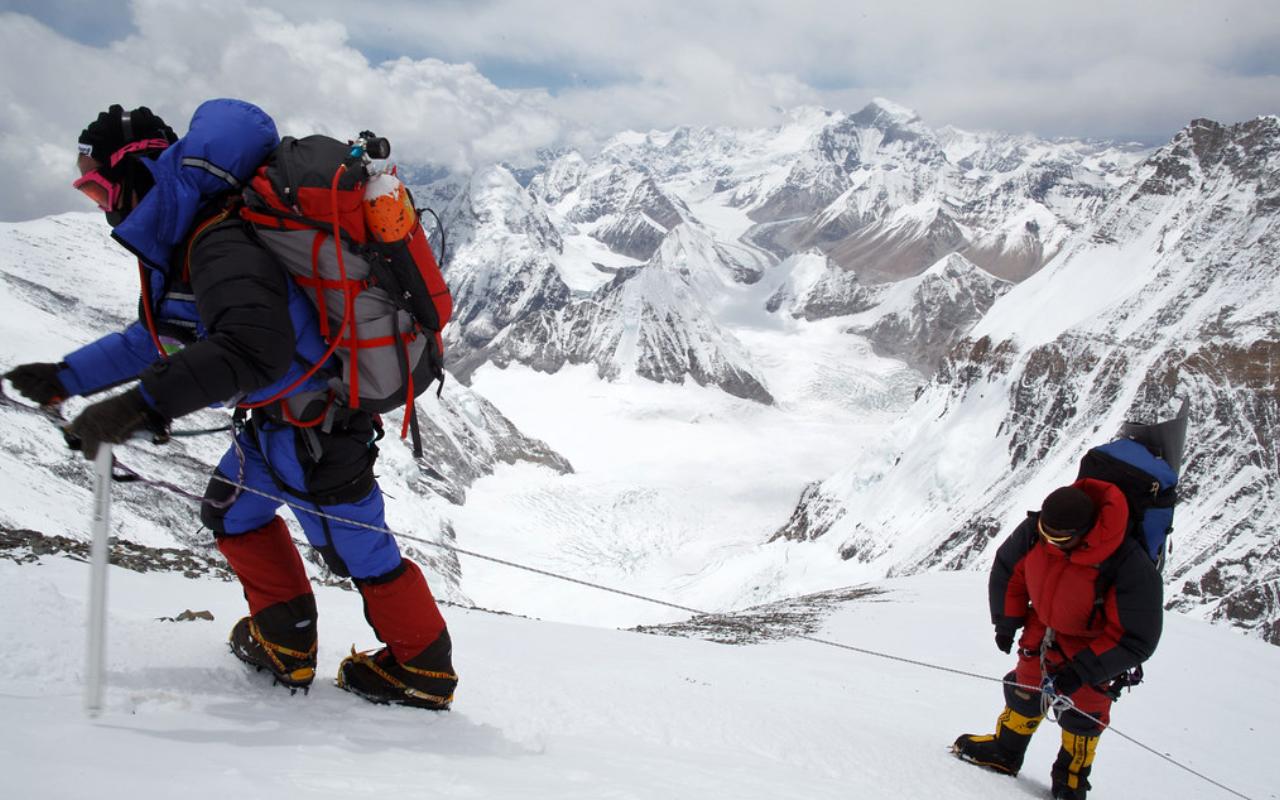
Once past 8,000 meters, Everest reaches what is known by the mountaineers as the Death Zone. The name is no exaggeration. An increase in elevation also reduces the oxygen level to only a third of what is required by humans at sea level.
The human body starts to deteriorate very fast without the use of supplemental oxygen. The brain cannot regenerate cells, some processes in the body find it hard to operate, and each move becomes a marathon.
The dangers here are many. One of the most widespread dangers is exhaustion, one of the most common killers. Even the most powerful athletes can stagger just several hundred meters to safety after several days of climbing in thin air.
High-altitude cerebral edema (HACE) and high-altitude pulmonary edema (HAPE) are two forms of altitude sickness that can strike suddenly, making you feel confused, with fluid in your lungs, or with deadly swelling in your brain. Hypothermia and frostbite make fingers and toes black in hours.
Another risk that is always present is falls. There is not much room to make a mistake in the icy slopes, changing weather, and sheer cliffs of Everest. One slip and a climber will go crashing down into complete oblivion. Avalanches, hidden crevasses, and blizzards add to the risks. These dangers explain why Everest has claimed so many lives.
Bodies can hardly be recovered in the Death Zone. At those altitudes, the helicopters cannot fly safely. Already in a lowered oxygen state, rescue teams put their own lives in jeopardy when they attempt to drag up the load of an extra human. In the vast majority of cases, no one carries dead climbers across the Death Zone. The mountain serves as their cemetery.
Rainbow Valley acts as a concentrated reminder of this ugly truth. Every climber lying there was able to endure the full force of the Death Zone. In their stories, we are reminded that Everest is not conquered but survived.
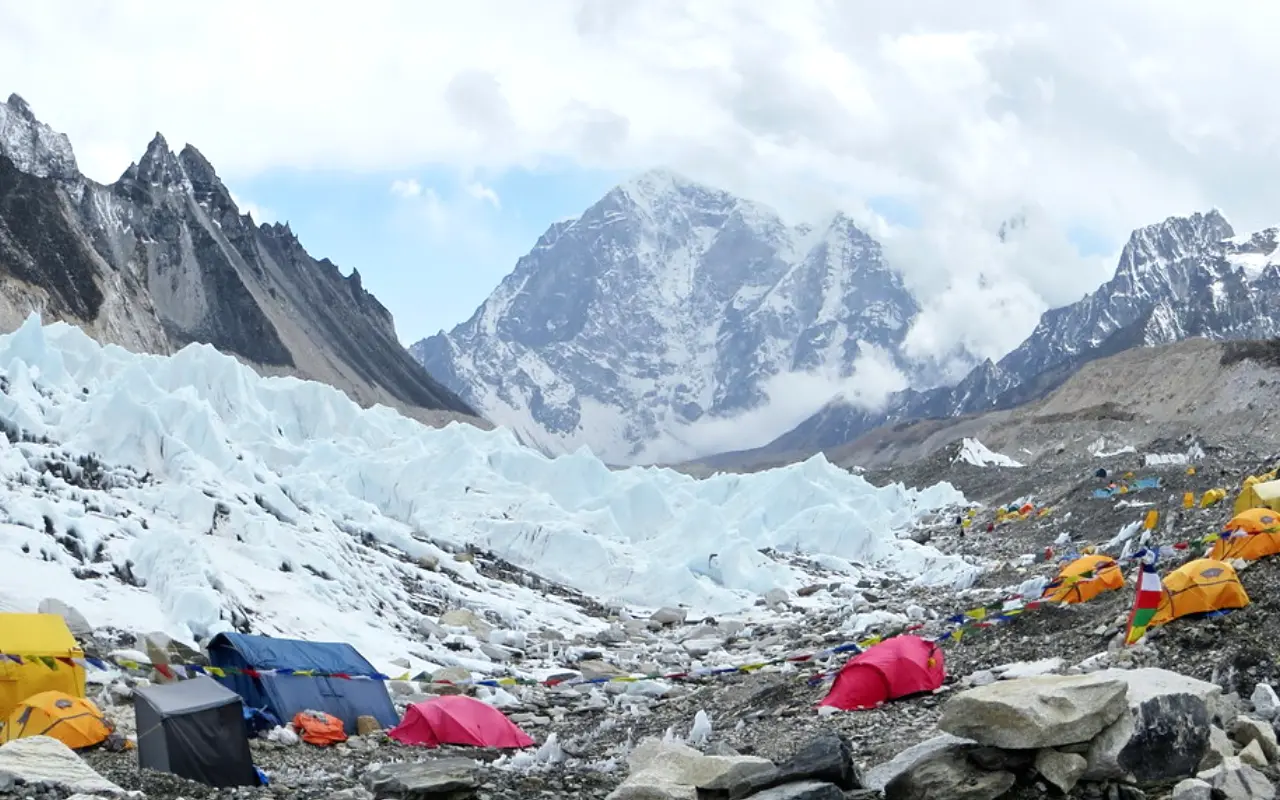
Famous Stories of Climbers Who Rest in Everest Rainbow Valley
Everest Rainbow Valley is more than a name; it is a group of human stories. All of the bodies illustrate an example of a climber who, at one point, had a dream of being on the top of the world. Some names have become a part of the history of Everest, forever tied to the slopes where they now rest.
George Mallory/Andrew Irvine (George Mallory) (1924)
The loss of George Mallory and Andrew Irvine is a mystery of Everest. They had tried the mountain way up in 1924 when only oxygen tanks and experimental equipment were available. They never returned.
It is controversial whether they ever made it to the top before they died or not. Mallory was discovered in 1999, and his body was very well preserved. His history serves as a chilling account of the eternity of the mountain.
“Green Boots” (Tsewang Paljor, 1996)
Green Boots, known later as Tsewang Paljor, an Indian climber who died in the 1996 Everest disaster, is the best-known character in Everest Rainbow Valley. And for years, his corpse had lain in a cave of limestone on the Northeast Ridge that every mountaineer who came past could see his green boots. Green Boots turned into a famous icon of the danger of Everest.
Scott Fischer (1996 Disaster)
The Everest season of 1996 was actually among the worst seasons when several climbers were lost. They included Scott Fischer, who was an American senior skills guide and a mountaineer.
Fischer died of exhaustion and high altitude sickness, trapped in a storm on the face of a mountain. It was immortalized in books and films, as that season brought out the ambition and weaknesses of those climbing Everest.
Francys Arsentiev- Sleeping Beauty (1998)
Francys Arsentiev was the first American woman to summit Everest without any additional oxygen. However, on the way down, she fainted at the Death Zone. Several climbers attempted to assist, but not one was able to bring her down.
She perished in the hills and is called Sleeping Beauty in reason of her peaceful demeanor, highlighting her narrative as victory and defeat in one ascendancy.
The 2019 Overcrowding Tragedy
In 2019, horrifying photographs were taken of what has been dubbed a traffic jam near the summit of Everest, where hundreds of mountaineers have been forced to wait in line in the Death Zone.
11 climbers died in that season, due to delays, fatigue, and a shortage of oxygen. Instead, it grew again, Everest Rainbow Valley left the world in no doubt about how human ambition can sometimes have too much of a good thing.
Although heartbreaking, these stories are a part of the history of Everest. They are testaments to human drive as well as tragedies. Each climber was a boundary pusher; they all went through incredible odds, and they all became one with the mountain they cared about.
The Ethics of Everest Rainbow Valley
Given that there are so many corpses on Everest, this brings up related hard ethical dilemmas. Should workers of the climbing set themselves the task to save the lives of sufferers even at their own peril? Or should survival come first in the Death Zone?
Rescue in the Death Zone is different from a rescue situation at lower altitudes. In fact, a climber who chooses to assist another in difficulty is putting their own safety at risk. To carry another human being at an altitude of 8,000 meters, even for a short period of time, could be the end of life for both parties.
Many of the climbers left for dead are dying despite others being in proximity. For people from the outside world, this is incomprehensible, but on the mountain, it is more an arithmetic computation than anything else.
Another debate is whether bodies should be retrieved or left frozen in place. Some argue that climbers should rest where they fell. Others feel body retrieval is an act of respect towards the dead and provides closure for families who were left with uncertainty.
Sherpas, who risk their lives by taking climbers to the mountain, also have their own cultural views of body retrieval. Many Sherpas view the mountain as sacred and do not wish to disturb anyone left behind.
In recent years, some of the bodies, such as Green Boots and Francys Arsentiev, have been moved to less prominent locations on the mountain out of respect for the dead. But many others remain, still occupying the Everest Rainbow Valley. The arguments continue, and the debates go on. But what is certain is that each climber who lies in Rainbow Valley is a reminder of Everest’s brutal character.
US$ 1100
Lessons from Everest Rainbow Valley
Everest Rainbow Valley isn’t just a haunting landmark. It’s an educator. Every climber passing through Rainbow Valley learns valuable lessons about risk, respect, and humility in the face of nature’s magnitude.
First, Everest is more than glory. Climbing to the top of Everest is an accomplishment, but surviving is a challenge. The summit is not what counts. What matters most is that you returned safely.
Second, preparation is everything. Proper acclimatization, physical preparation, and climbing with knowledgeable guides can mean the difference between life and death. More than a few climbers who met their fate in Everest Rainbow Valley can attribute their fate to always living in the Death Zone or misinterpreting their limitations.
Third, the valley teaches respect. The bodies in the valley aren’t an obstacle, and they aren’t a tourist trap. They were people who dreamed, trained, and loved. You shouldn’t look at them as another part of the landscape. You should consider them with reverence.
Finally, Everest Rainbow Valley is a cautionary tale to climbers. The mountain will not forgive. Careless ambition can kill. If you are going to climb, you will need to bring brain with brawn.
Conclusion
Mount Everest is an ambition and an obstacle. To most people, it is the pinnacle of human success. But to the people of Everest Rainbow Valley, it was the ending.
Everest Rainbow Valley is a hymn and a scold. It is lovely when you can see its bright colors play against the white snow. However, it is also a tragedy since every color is the life that has been broken.
Everest has left its mark on the climbers who camp there. They remind us that the mountain cannot be conquered; it can only be endured, respected, and occasionally survived at a high price. Their tales remain timeless lessons to all future climbers and a reminder to all of us that we should honor the power of nature.
To have Everest in your dreams is to have greatness in your dreams. Rainbow Valley has to be remembered together with the cost of that dream. Finally, we learn the lesson of the mountain, humility, and the ambition of man being submissive always to the power of the earth.